
News · 3 October 2026 · Conference · West Bengal
First day of the General Council: from the flag to the industry panel
Kolkata, 3 October 2026. President Elamaram Kareem hoisted the flag. Thirty delegates discussed the reports. The day closed on the industry panel: electricity, first made a commodity, is being turned into a speculative commodity.
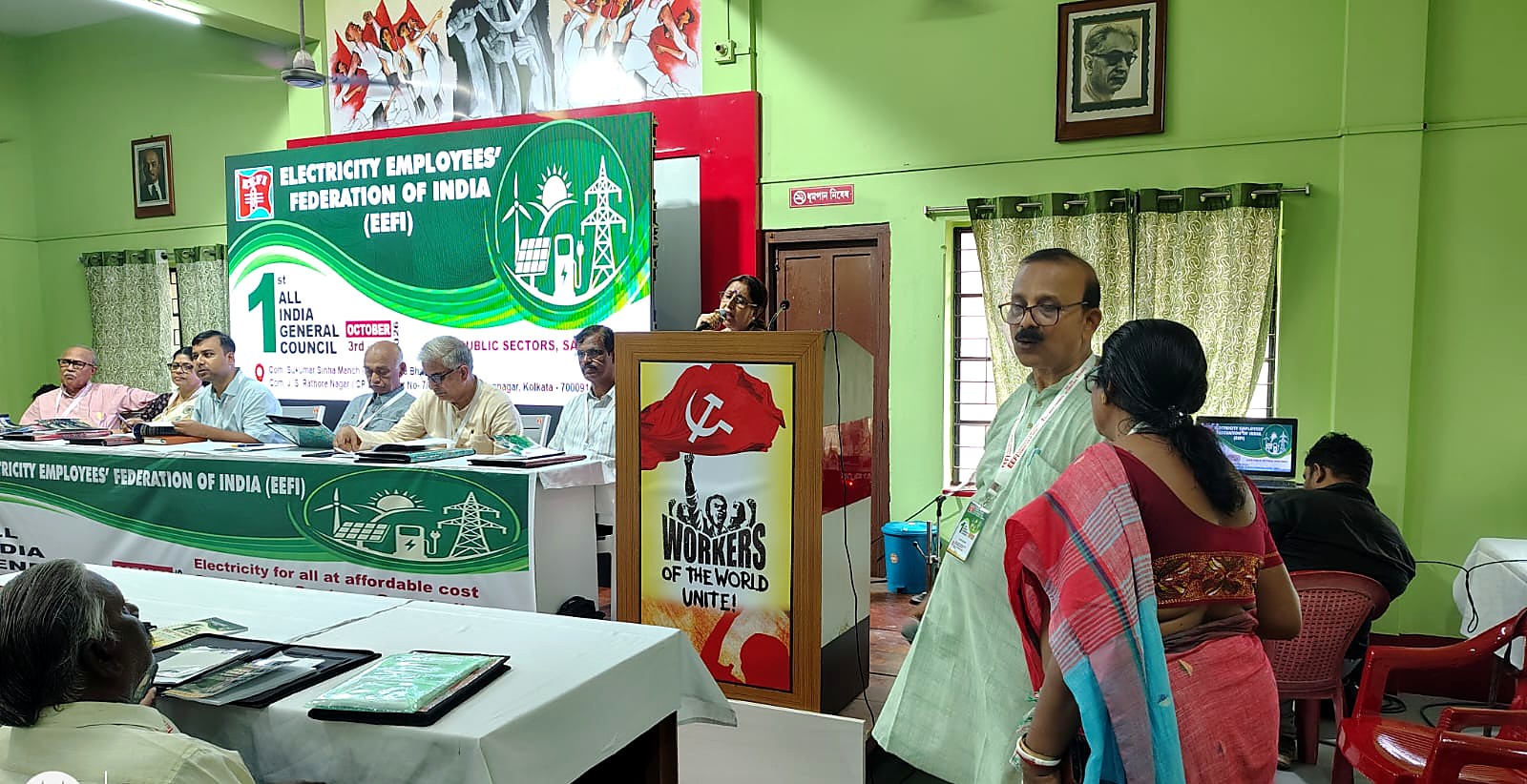
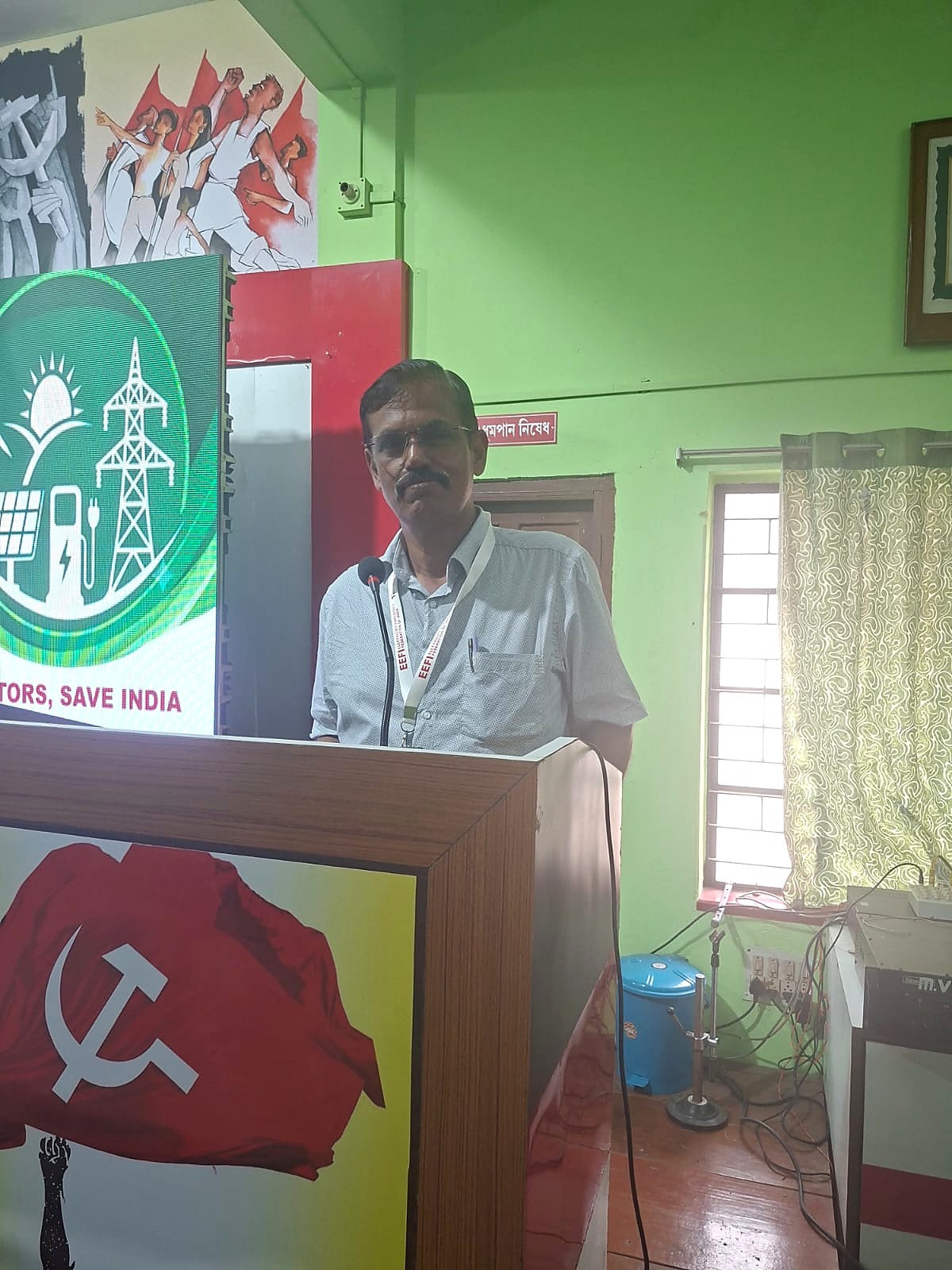
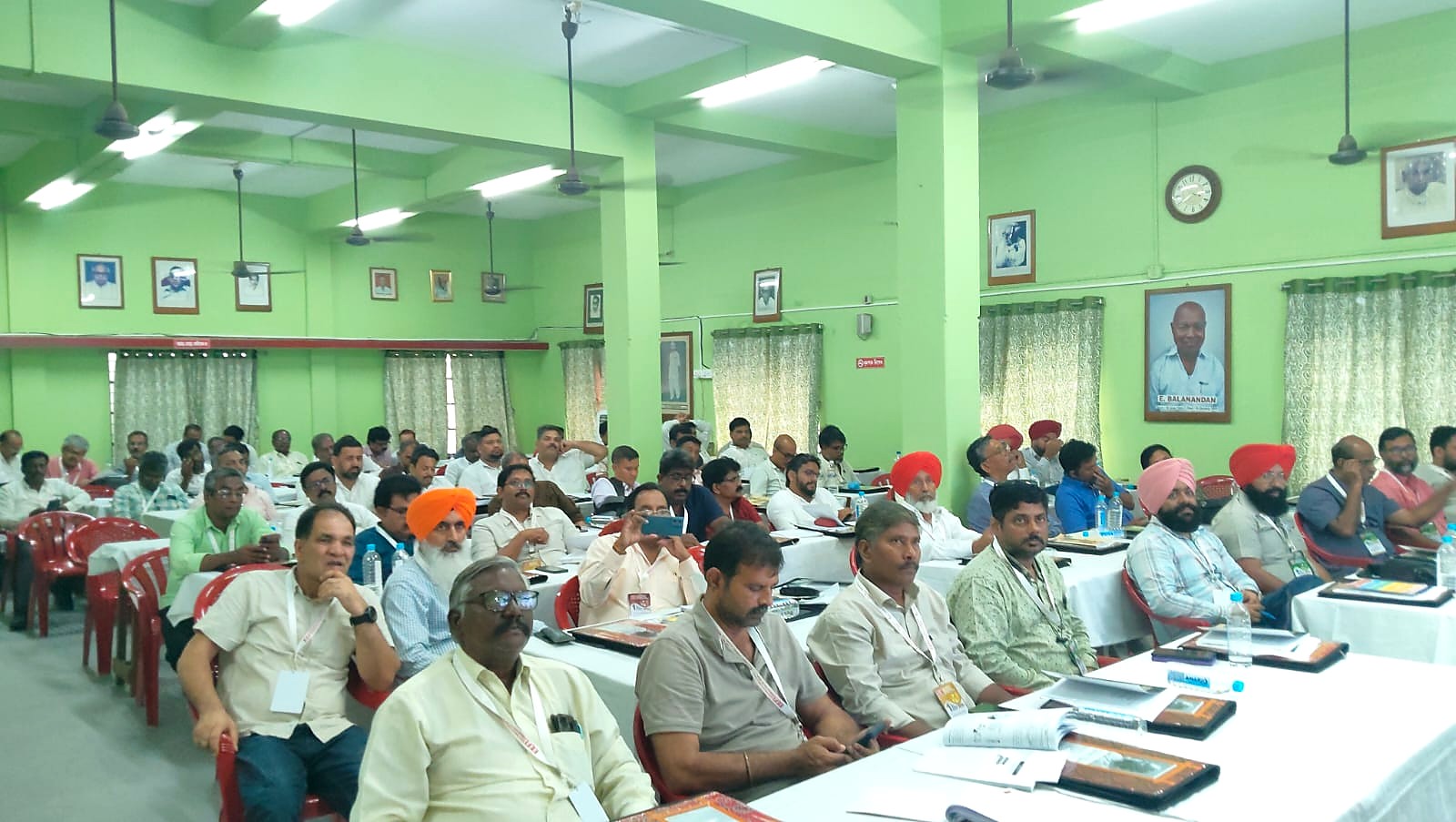
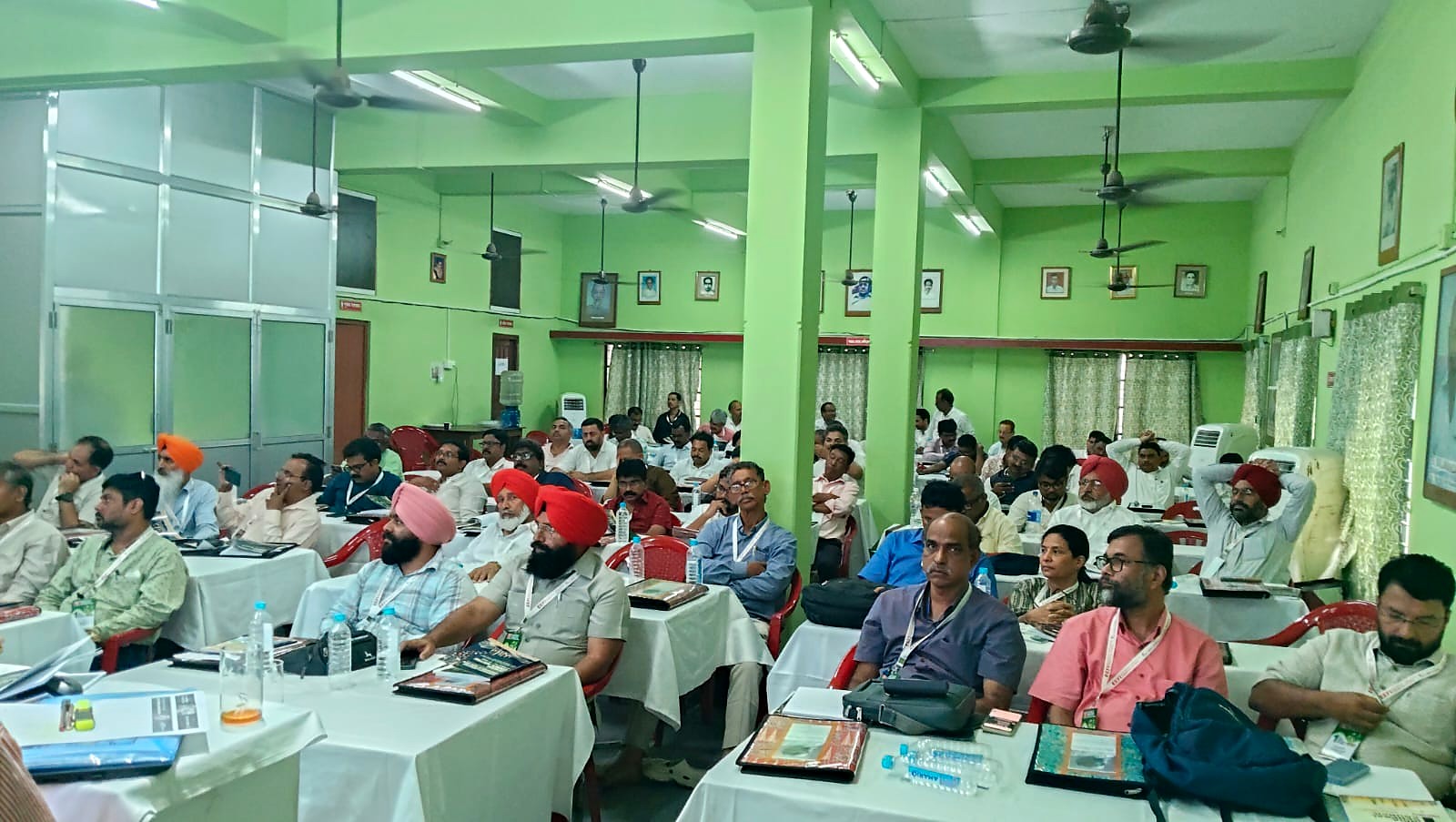

The first All India General Council of the Electricity Employees Federation of India opened on 3 October 2026 at Comrade Sukumar Sinha Manch, Mohit Moitra Bhavan, Comrade J.S. Rathore Nagar, CP Block, 7/6, Sector V, Bidhannagar, Kolkata. The council sits on 3 and 4 October. The first day began with President Elamaram Kareem hoisting the flag. He placed flowers at the martyrs’ column. Working President Swadesh Dev Roye, General Secretary Sudip Dutta, Treasurer S. Rajendran, the other office-bearers and the delegates followed.
Sanjukta Bagchi then sang revolutionary songs. Somanath Bhattacharjee, Working President of the WBSEB Workmen’s Union, welcomed the council. Advocate Bikash Ranjan Bhattacharjee, chairman of the reception committee, spoke on the place of this sector. Electricity, he said, is strategic for the whole working class, not only for those who work in it. EEFI has taken an important place in organising the workers of the sector. Its striking force is many times that of unions in other sectors, and the responsibility that sits on the organisation is therefore also high.
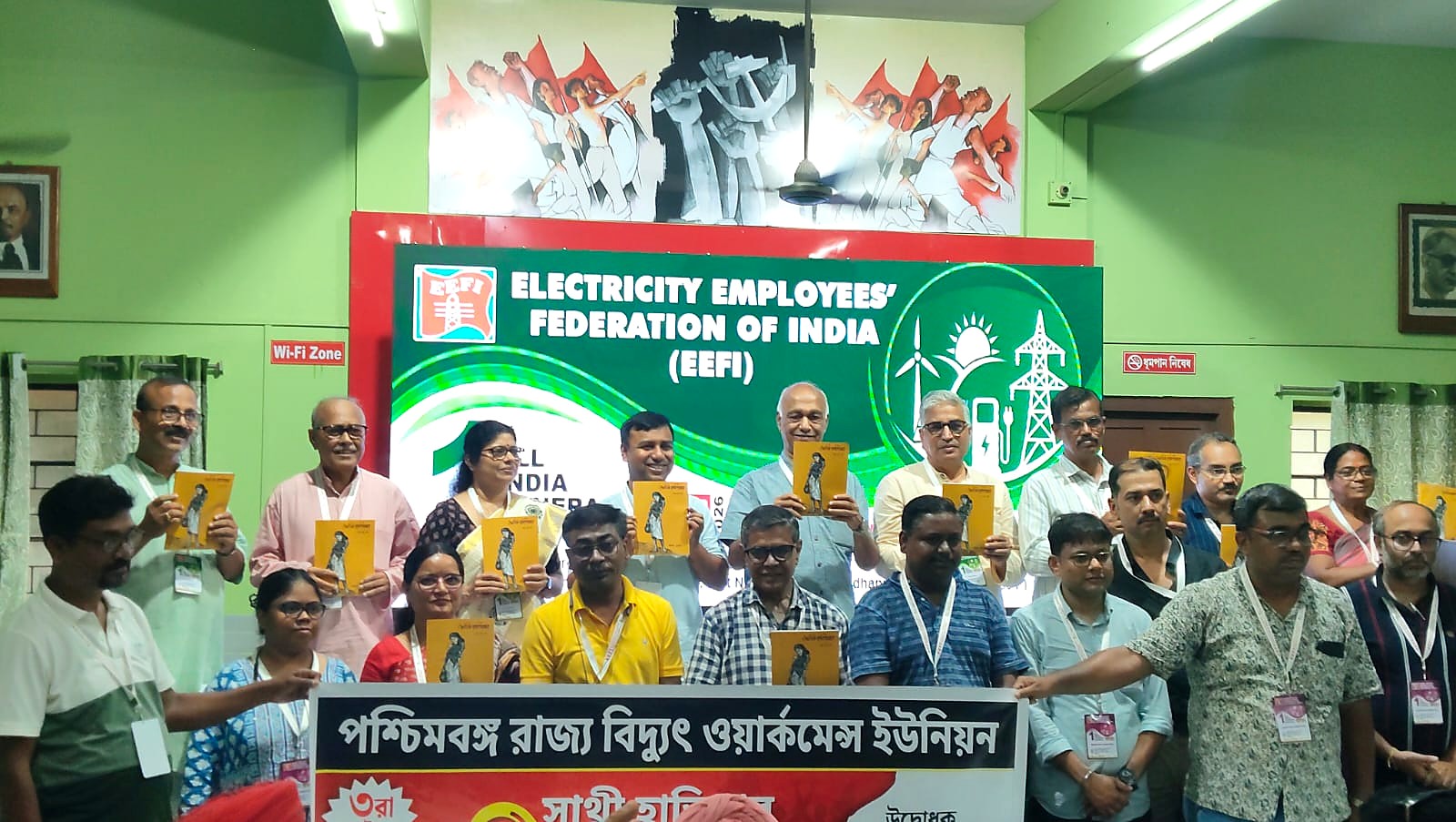
President Elamaram Kareem released Sathi Hatiyar, the journal of the WBSEB Workmen’s Union, at the council. It is a regular publication of essays, stories and poems.
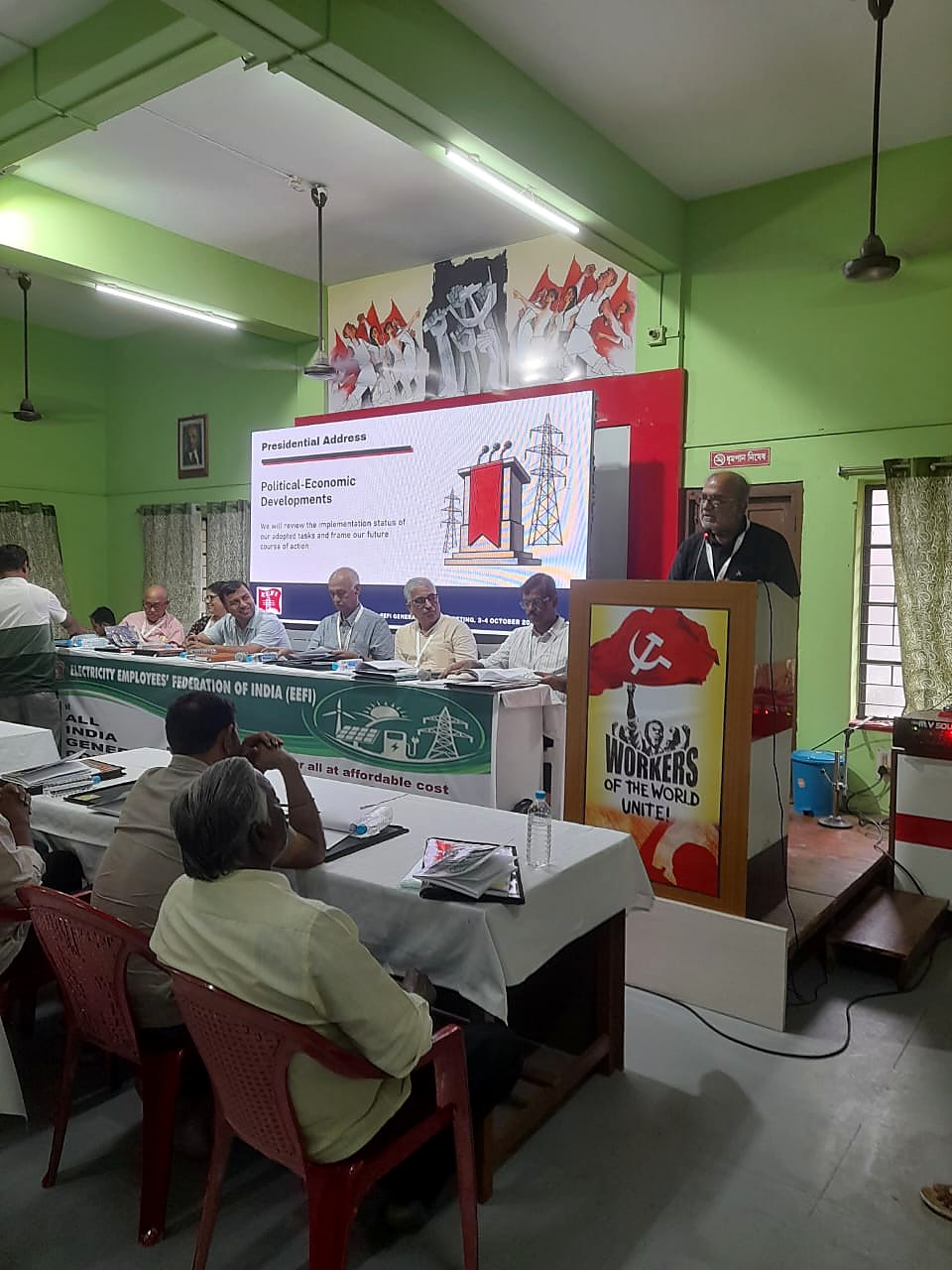
President Elamaram Kareem then delivered the presidential address, on political and economic developments. He placed the burden of the present crisis on workers and the people, and named the Labour Codes and the other anti-worker, anti-people measures of the Centre as the form of that burden. He called the council to organised struggle, including the Occupy Delhi mobilisation from 1 December 2026. The address is published in full as a separate note.
General Secretary Sudip Dutta placed Part I of his report, the organisational report: expand utility by utility, organise the unorganised, and hold the work to a collective centre. That report is published separately.
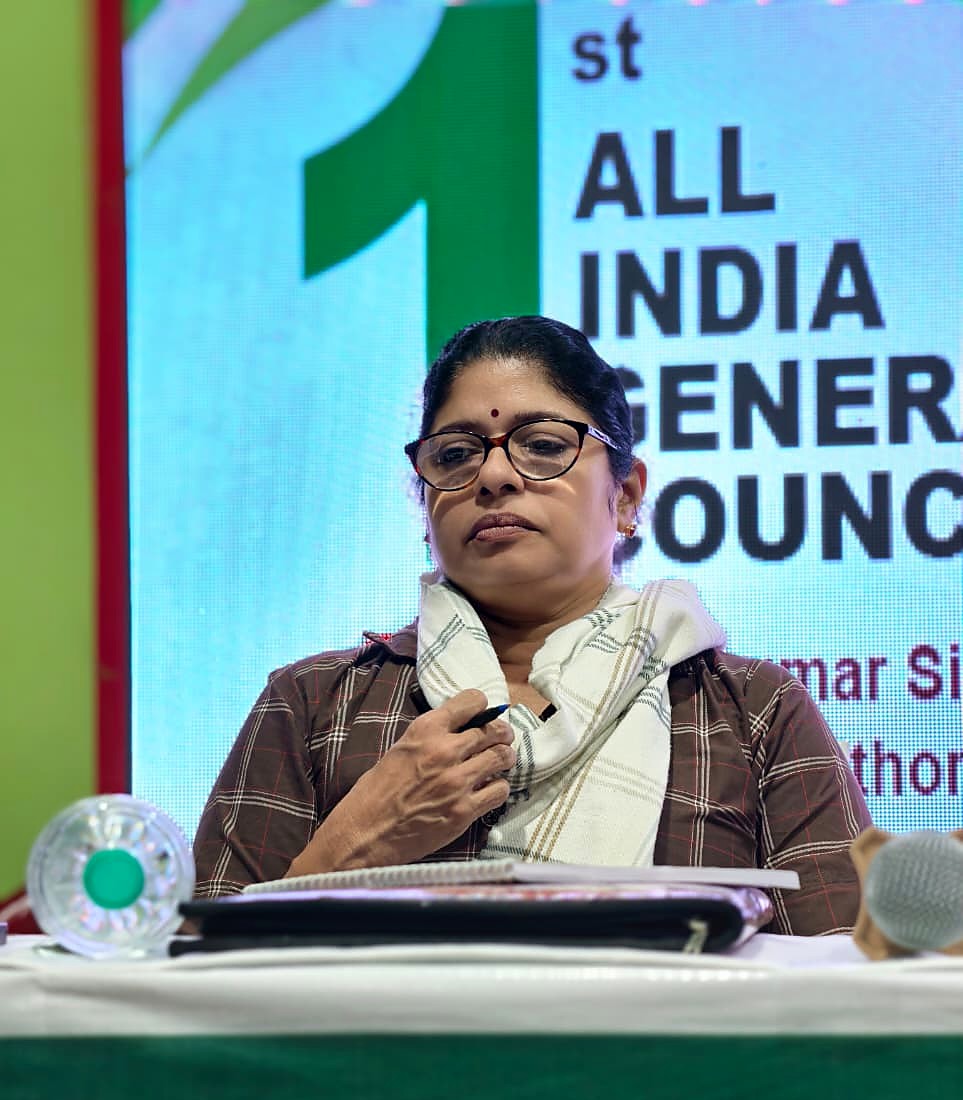
Deepa K. Rajan, national convener of the Working Women Sub-Committee, then presented the report of the women’s subcommittee. She emphasised the importance of organising women in the industry and of fighting every gender-based division. The organisation, she said, has to function in a more women-friendly way, and each union has to constitute an Internal Complaints Committee under the POSH Act.
Treasurer S. Rajendran placed the financial report, the accounts and the position of the audit. The accounts cover January to March 2025, the year 2025–26, and April to September 2026. He reported that internal audit for these years has not yet been done, and that it is to be completed immediately after the conference. Expenditure at the Centre has risen because the organisation has expanded and its activity has multiplied. The budget already adopted by the office-bearers and the Working Committee was placed before the council for formal adoption. He reported the regular expenses at B.T.R. Bhawan and the first stage of the library at P.R. Bhawan, and the decision to build a research and education facility in Delhi and to strengthen the Federation’s media work, which may require more cadres at the Centre. Affiliated unions are to send their annual returns and registration certificates. Only a few have done so. The Federation has now been registered in Kerala, after a long effort, and affiliation certificates are to be issued to the unions. Bookkeeping is to be made uniform at the Centre and in the states.
A detailed discussion followed, on the organisational report, the accounts, and the political developments placed by the President. Thirty delegates spoke.
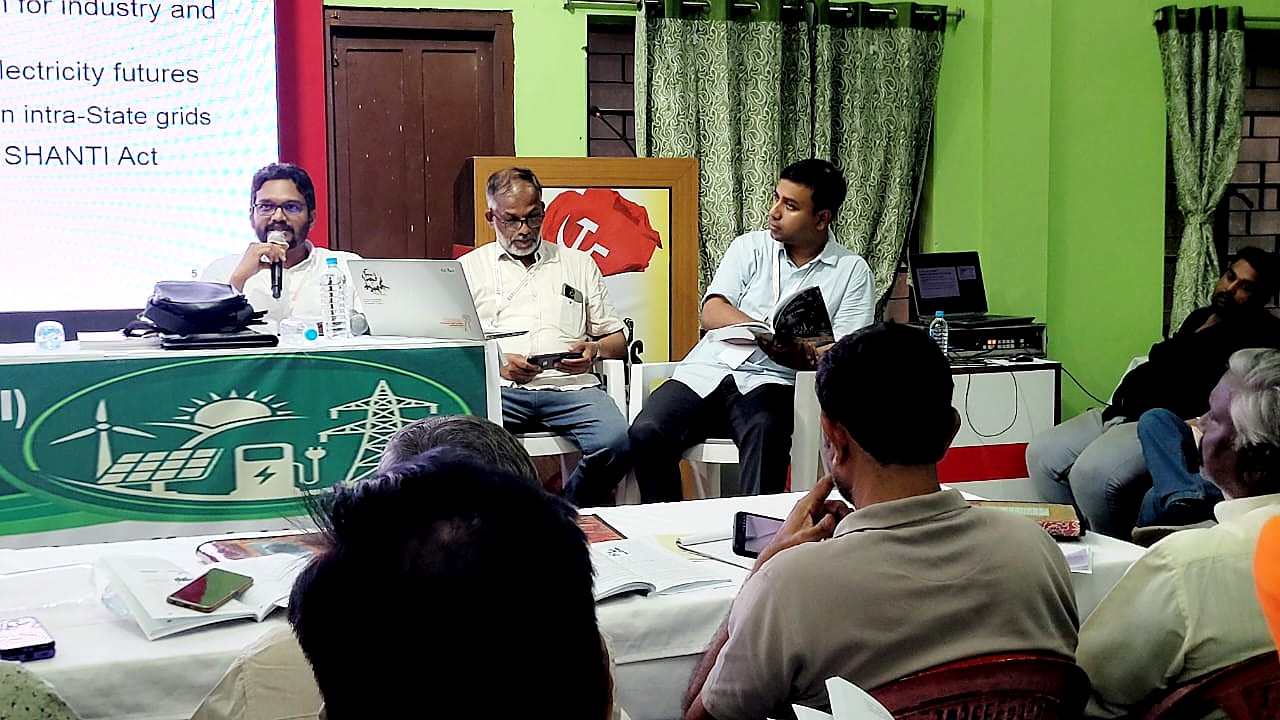
The industry report, Part II of the General Secretary’s report, was then placed as a panel. General Secretary Sudip Dutta, Dr M.G. Suresh Kumar and Sujith P.G. took the council through it, point by point. Electricity was first made a commodity. It is now being turned into a speculative commodity. Installed megawatts are no longer the same thing as dependable, affordable supply at the hour and the place it is needed. Private capital is taking the profitable slices — urban feeders, data-centre parks, virtual contracts, nuclear licences — while the public utility is left with universal service, rural and agricultural supply, the discipline of the grid, and the political blame.
The paper, drawn from the Central Electricity Authority, Grid-India and the Ministry of Power, and read with the regulations and the court orders, put the figures up to 31 August 2026 before the council. Installed capacity stood at about 555.82 GW. Non-fossil capacity — solar, wind, large hydro, other renewable energy and nuclear — was about 304.33 GW, or 54.75 per cent. Solar alone was about 168 GW. On paper, the 2030 target of 50 per cent non-fossil capacity has been crossed five years early. The summer and the weak monsoon of 2026 showed the other side. Peak demand reached 256.1 GW on 25 April and an all-time high of 270.8 GW on 21 May, and returned to 269 GW on 10 September, a near-summer peak in a month that normally eases. Night shortages were about 5.4 GW in the first heatwave and as much as 7.7 GW in September. Prices on the exchange hit the High Price Day-Ahead ceiling of Rs 20 a unit. Several states imposed rotational cuts. The Ministry invoked Section 11 not only for imported-coal and gas plants but, in late September, for captive stations of 50 MW and above. The shortage was not of nameplate megawatts. It was of firm, dispatchable and affordable electricity after sunset, when solar falls away and cooling and irrigation remain. Without storage, flexible hydro, flexible thermal plant and disciplined long-term contracts, more solar deepens the evening ramp. It does not close it.
The same months rewrote the law and the market around that scarcity. Parallel licensing on shared public networks. Cost-reflective tariffs, and a five-year phase-down of the cross-subsidy paid by industry and the railways. Market coupling. A capacity market that pays for “availability” of power on top of the energy price — payment for capacity, not for the energy itself. Virtual power-purchase agreements, under which a project sells into the wholesale market and a corporation settles only the difference from a strike price, then claims the green certificate without taking the electricity or changing what it actually consumes. Monthly electricity futures on the National Stock Exchange, settled in cash on the Indian Energy Exchange price. On the first day, more than 4,000 contracts were traded, about 200 million units, with a turnover of more than Rs 870 million. A shorter real-time market — bidding cut from 15 minutes to 5, and the gap from schedule to delivery from 75 minutes to 50 — reduces some forecast error and thickens the speculative layer of intra-day trade. The SHANTI Act opens civil nuclear power to private groups. Distribution and transmission companies are being taken towards public listing. Intra-state grids are being bid out. Past losses and project risks are being loaded onto future tariffs. Corporate generators are protected. Households pay.
The panel placed the consequence before the council. The public is deprived of electricity, and electricity is being made a luxury. Industry and agriculture are pushed towards collapse, and the service sector is hit with them. That changes the path of the country’s development. It is not a technical adjustment of the power system. Nameplate capacity of 556 GW, and 55 per cent non-fossil, did not prevent night shortages of 7.7 GW, a price of Rs 20 a unit, or daily cuts. What is missing is public investment in firm evening and night power, storage, flexible hydro and thermal plant, fuel and wires — not another auction. Parallel licences, data-centre-only licences, open access and the listing of discoms are one mechanism: they move the paying load onto private books and leave universal service, agriculture and the wires with the public utility. Scarcity has shown the limit of running an essential service off a spot market. The first day of the council closed on that report.
Issued by
EEFI Centre