
News · 26 September 2026 · Notice
Draft National Electricity Policy 2026: access, scarcity and a failed reform model
The draft says access and scarcity are over, then hands the rest to tariffs, open access, capacity markets and private capital. The Centre’s note tests those claims.
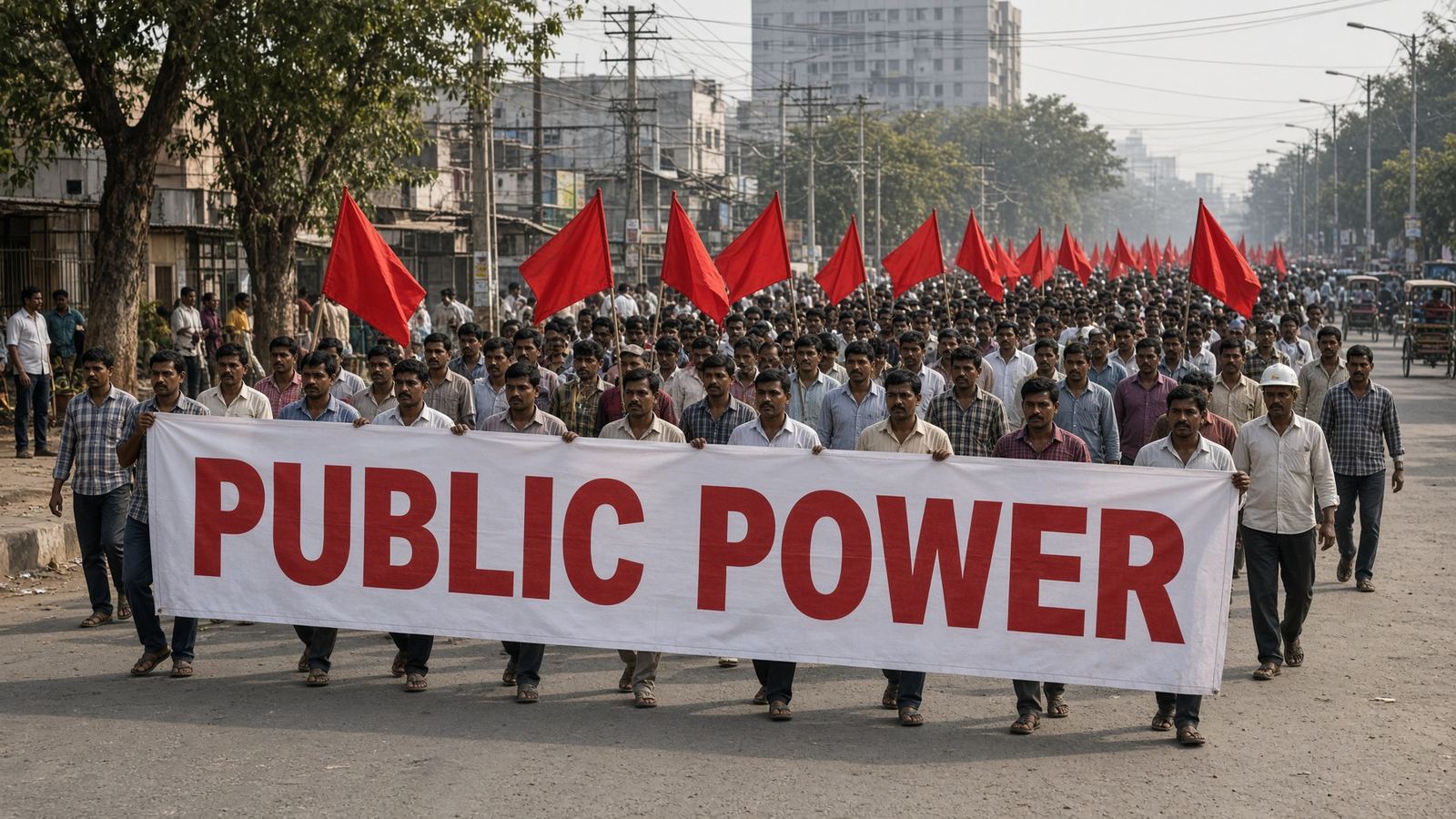
The Draft National Electricity Policy, 2026 presents itself as the map to 24×7 power for 2047. Its first political act is to declare that access and scarcity are solved. What it then proposes is cost-reflective tariffs, exemption from Universal Service Obligation for large consumers, surcharge-free open access for manufacturing, capacity markets, competitive bidding inside the states, listing and public-private partnership in distribution, private nuclear power, and public money to de-risk private finance.
Those claims do not survive the official record. A village is still counted as electrified with a transformer, a public bulb and 10 per cent of households. “Unwilling” often means a household that cannot pay for poles, wiring or an installation report. Peak, evening and fuel-backed supply remain scarce: the South and the East still show peak deficits on the CEA’s own 2026–27 balance; evenings in September 2026 cleared at the ₹10 cap; dozens of thermal plants sat critical on coal while mine-head stocks looked comfortable. Private plant is already more than half of installed capacity. Shortage did not end. It changed who captures the rent.
DISCOM stress is not only theft. Power purchase is 70 to 80 per cent of cost. Debt stood at ₹7.26 lakh crore on 31 March 2025. Regulatory assets, parked for a later tariff shock, run into lakhs of crores. A small all-India “profit” in 2024–25 is private profit pulled across continuing losses of state DISCOMs. The draft’s answer is to tighten the same model: no new regulatory assets, monthly pass-through of purchase cost, and an exit for load above 1 MW. Paying industry leaves. Households and agriculture keep the obligation.
The note reads the draft section by section — tariffs, generation, storage, markets, the state grid, distribution — and sets the public alternative the text refuses: public and cooperative investment, universal service without a 1 MW exit, distribution kept as a public service, planned capacity and social dispatch, public banks for public assets, and access defined as a wired, affordable household connection. The full note is attached.
Issued by
EEFI Centre